
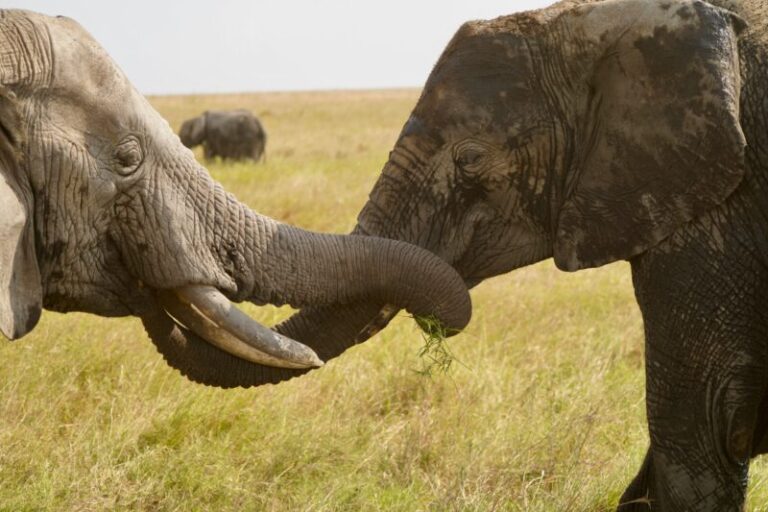
7-Day Tanzania Luxury Honeymoon Safari
A romantic 7-day luxury safari through Tarangire, Ngorongoro Crater and the Serengeti, staying in handpicked lodges and camps.
Home » 12-Day Tanzania Wildlife Safari
Overview
The 12-day Tanzania wildlife safari gives you time to slow down. Starting in Arusha, you spend extended time in Tarangire, Lake Manyara, Ngorongoro Crater and the Serengeti. Along the way, you follow the wildlife at a relaxed pace.
As a result, it is ideal for photographers and anyone who wants to experience the Great Migration properly.
Every safari we run is private and tailor-made. You travel in a 4×4 safari Land Cruiser with an experienced driver-guide. In addition, you can start on any date that suits you. The final price depends on your travel style (Signature, Classic or Adventurer), your group size and the season.
The official authorities set park entry and permit fees: the Tanzania National Parks (TANAPA). We book permits directly and confirm the current rates before you pay. Ask us for a quote and we will reply within 24 hours.
Itinerary
You can adjust every day to your pace, interests and choice of lodges.
Arusha is the safari capital of the country and a bustling tourism-driven city. Your driver-guide will meet you in Arusha. Together, you then begin the transfer to Africa Safari Rift Valley. Without stops, the drive will take approximately 2 hours. On arrival, you will have time to refresh and explore the expansive surroundings of the accommodation. Finally, enjoy dinner under the stars and a good night’s sleep in one of our comfy accommodations.
You only need to open your eyes and walk to the restaurant to enjoy the expansive views of Lake Manyara. After breakfast, your driver-guide will take you to the entry gates of Lake Manyara National Park. The park offers a big ecological variety in a more condensed area. From the park entrance, the road winds through a groundwater forest area. Here, you can see baboons lounging in the trees. Meanwhile, the famous tree-climbing lions inhabit the mahogany and acacia trees. If you’re lucky, you might spot them lazing on a tree branch.
Next, you make your way to the open grassy banks of the lake. Here, you will see wildebeest, giraffes, zebras, and large buffaloes in abundance, grazing away. The lake itself is home to more than 400 species of birds thriving at the water’s edge. These include the thousands of strolling flamingos. Between all this beauty, you have a lunch break. Then, at the end of the afternoon, you’ll drive back to Africa Safari Rift Valley for dinner and sleep.
After a good night’s sleep, today is the ‘day of the elephants’. Tarangire is an hour’s drive from the lodge and presents quite a different landscape to Lake Manyara. The hilly savannah together with the Tarangire River makes this the favourite park for large herds of elephants. During the dry season (June – October), the Tarangire River is the only source of water available. As a result, it is a popular spot not just for the elephants. A variety of small hoofed animals and an abundance of birdlife gather here too. Lions, warthogs, giraffes, zebras, and monkeys all roam the park, waiting for the ‘perfect picture’ opportunity! In the evening, you move to Africa Safari Lake Manyara, your base for the next two nights.
Time to take it easy—African style! One of the favourite Swahili expressions is polepole (slow slow) and that’s exactly how today will go! After several busy days filled with activities and travel, you may wish to sleep in. Alternatively, enjoy a second easy coffee while watching the animals graze near the restaurant. After breakfast, you will visit a Maasai boma, the traditional home of the Maasai, at Mto wa Mbu. It consists of a variety of small huts made of mud, sticks, and cow dung.
A circular “fence” of thorny bushes surrounds the boma to protect the tribe and their cattle from predators. During your visit, you can practise a traditional dance and talk about daily life, traditions and customs. You can also admire the beautiful beadworks of the Maasai women. Afterwards, you can spend the rest of the day in relaxation mode. For example, take a refreshing swim in the pool or read a book. Before you know it, it is time for a meal with fresh vegetables from our garden.
A day of rest and relaxation or an extra excursion (not included). You can take a stroll through the camp, enjoy the view or read a book. Alternatively, have an afternoon snooze while taking time to process recent impressions. Meanwhile, you enjoy your meals in the restaurant with a view of the birds and animals as they pass by. After lunch, make yourself ready for your transfer to Karatu. Your overnight stay will be at Africa Safari Karatu.
Be sure to wake up early today, so there is no delay on your descent into the famous Ngorongoro Crater. As soon as you arrive in the Ngorongoro Conservation Area, the beauty around you will amaze you. It gets even better at the edge of the crater. There, you take in the amazing view over one of the Natural Wonders of the World. The crater of this inactive volcano is approximately 3 million years old, with a floor of about 260 sq km. In fact, it is the largest unbroken volcanic caldera in the world.
Due to its natural borders, the wildlife in the crater is amazing. The crater is home to the Big Five and offers a good chance to spot the rare black rhinos. Throw hyenas, zebras, buffaloes, and elephants into the mix. As a result, you have the perfect canvas for a pretty awesome safari experience. At the end of the afternoon, you return to your lodge, Africa Safari Karatu, for a well-deserved night’s sleep.
Today you have a long and rewarding drive ahead of you to central Serengeti. Along the drive, you will be able to spot giraffes, zebras, and other animals. Your first glimpse of the endless plains of the Serengeti will amaze you. Finally, you arrive at our Africa Safari Serengeti Ikoma Lodge. By then, you have glimpsed the 14,000+ sq km that make up the wonder of Serengeti National Park.
First, enjoy a bit of a sleep-in and an easy morning around the campgrounds. You could read a book on the patio, or simply make the most of having some downtime. Then, this afternoon, you go on a walking safari. It is a truly unique experience. You explore new territory and follow the animals on foot with your very own armed ranger. The walking safari takes approximately 2 hours and ends with a sundowner while overlooking the Serengeti.
Afterwards, head back to the accommodation for a quick dinner. Then join in on a thrilling adventure: a night game drive. The vehicle has a spotlight, and before you know it, you catch the first reflections of the animal’s eyes. Out there, the night is another world altogether. You notice interesting action from nocturnal animals, different shades and shadows, and unknown sounds. Typical animals of the night are bushbabies, civets and genet cats, a rare aardvark or porcupine, and others.
After breakfast, you will begin the day’s game drive, heading north. The journey begins along dirt tracks through shrubby savannah, the habitat of impala and giraffe. After a while, you reach the Lobo area. Here, the landscape opens up to a mix of grasslands, rivers, hills, and forests. Depending on the movement of the migration, you might even head further north. There, you find forests of acacia trees and dense bush.
Many animals, both herbivores and carnivores, live in the area permanently. This northern section sees fewer visitors than the southern and central parts of the Serengeti. As a result, there are fewer cars on the road and the safari feels more ‘exclusive’. At the end of the day, you will leave the park through Klein’s gate. After a few kilometres, find another surprise; Maasai culture in its full glory. You’ll spend the night at Africa Safari Maasai Boma in a modern-style version of a traditional Maasai earth house. It also comes with an en-suite bathroom and king-sized bed.
After a good breakfast at Africa Safari Maasai Boma, you will depart on your game drive in Pololeti Game Reserve. Your driver-guide will take you exploring, following the movement of resident wildlife. Along the way, you also stop for a nice picnic lunch.
After breakfast at Africa Safari Maasai Boma, you re-enter Serengeti National Park through Klein’s gate. A full day of game viewing follows. Your driver-guide will follow the movement of the resident wildlife. Meanwhile, you gradually make your way towards the central Serengeti, with a picnic lunch along the way. By late afternoon, you settle in for your final night in the park. Then you are ready for tomorrow’s last game drive and flight from Seronera Airstrip.
After a good night’s sleep, this morning it is departure time. First, enjoy the last game drive. Then your vehicle takes you to the Seronera Airstrip for your flight back to Arusha Airport. After you board the aircraft, your trip nears the end. However, you can still peer out over the wings of the plane. Enjoy the magnificent views while flying over Serengeti National Park. Also admire the changing scenery of the Great Rift Valley. Finally, you land at Arusha Airport with a camera full of pictures to share with friends and family. Look back on the amazing memories from your African endeavour!
Here is what this safari includes, in the order you will experience it:
This is our slow-travel route. Two easy days near Lake Manyara break up the driving, so you never feel rushed between parks. As a result, it suits travellers who prefer depth to speed.
Photographers gain the most. With several full days in the Serengeti, your guide can wait for good light or stay with a sighting for hours. Meanwhile, the walking safari and night drive add a side of the bush that most short trips miss.
The walk lasts about two hours, so you should be steady on your feet. Otherwise, the 12-day Tanzania wildlife safari works for most adults and older children. To time the northern days with the herds, check our Great Migration guide, then send your dates through our booking page.
This safari visits Tarangire, Lake Manyara, the Serengeti and the Ngorongoro Crater. Each stop links to our detailed guide so you can read more before you travel.
You can do this safari all year. June to October is the dry season, with excellent game viewing. Meanwhile, January to February brings the calving season in the southern Serengeti. In addition, July to October is the time for river crossings in the north. Rates are lower in the April and May rains.
You may also like
A romantic 7-day luxury safari through Tarangire, Ngorongoro Crater and the Serengeti, staying in handpicked lodges and camps.
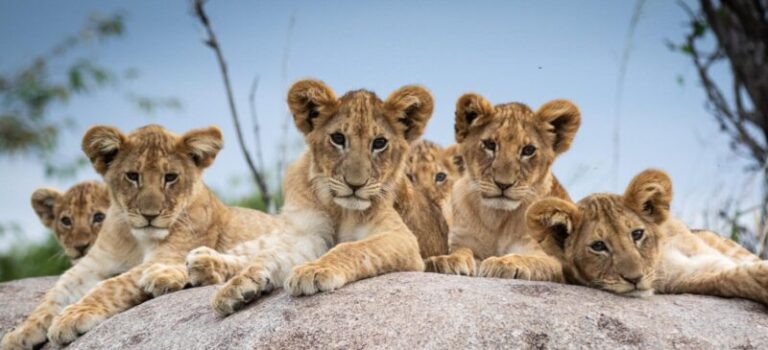
The Serengeti, Ngorongoro Crater and Lake Manyara, then barefoot days on Zanzibar’s beaches on this 10-day Tanzania honeymoon.
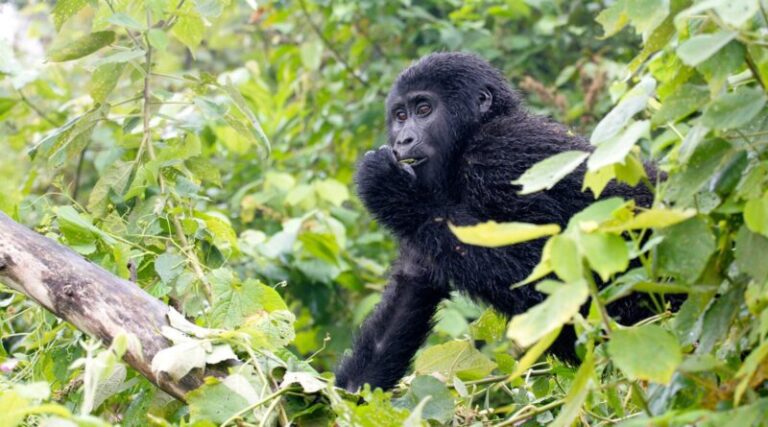
Pair Serengeti game drives in Tanzania with a mountain gorilla trek in Bwindi, Uganda, on this 6-day two-country tour.
We use cookies to understand how visitors use our website so we can keep improving it. You can accept or decline analytics cookies. Read our Privacy & Cookie Policy.
Gorilla Trekking, Wildlife Tours & Cultural Experiences.