
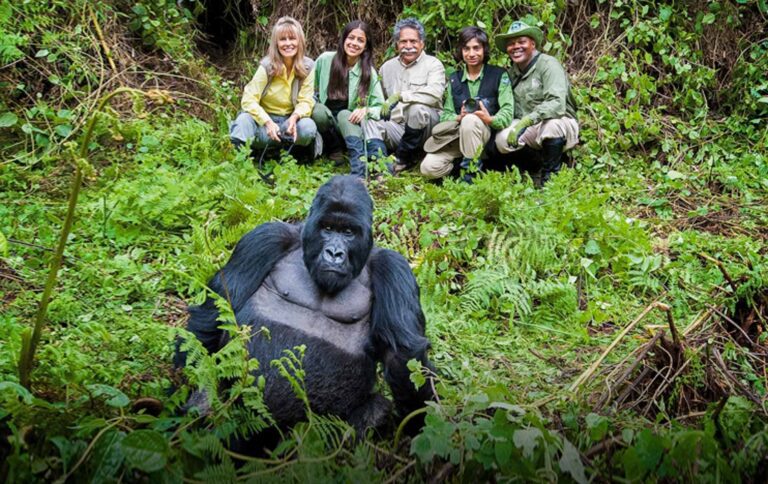
Gorilla Trekking
Trek mountain gorillas in Bwindi, Mgahinga or Volcanoes National Park. Compare Uganda and Rwanda permits, fitness, best time and gorilla tours.
Home » Chimpanzee Tracking
Chimpanzee tracking guide
Chimpanzee tracking is a guided walk through tropical forest to find a community of wild chimpanzees that is used to human visitors. Gorillas move slowly and stay close to the ground. By contrast, chimpanzees are fast, noisy and often high in the trees. As a result, expect pant-hoots echoing through the forest and sudden dashes across the trail. With luck, you may also watch them feed, groom and play.
Chimpanzees share most of our DNA, and many guests find watching them as memorable as meeting gorillas. Tracking also costs less and is more widely available, so it fits easily into most East African safaris.
Kibale is the best place in East Africa for chimpanzees. It has several habituated communities and high success rates, along with 12 other primate species. You can also choose between morning and afternoon tracking sessions.
Budongo Forest on the edge of Murchison Falls National Park has its own habituated community and tall mahogany trees. It therefore suits guests visiting Murchison Falls.
Kyambura Gorge is a sunken forest within Queen Elizabeth National Park. Its chimpanzee community is small, so sightings are less certain. Even so, the dramatic setting makes it a rewarding walk.
In Rwanda, chimpanzees live in Nyungwe Forest National Park, a high montane rainforest in the south-west. They also live in the smaller Gishwati-Mukura National Park. Nyungwe’s chimps range over steep terrain, so tracking can be harder than in Kibale. However, the forest is spectacular. In addition, you can combine tracking with the canopy walkway and colobus monkey groups.
Western Tanzania offers two remote chimpanzee parks on the shores of Lake Tanganyika. The first is Gombe Stream, where Jane Goodall began her famous research in 1960, and the second is Mahale Mountains. You reach both by small aircraft and boat, so they suit travellers with more time and budget. Ask us if you would like to include them.
In fact, the best primate safaris include both. Also see our gorilla trekking guide.
You meet the rangers at the park office for a briefing, usually early in the morning. Then a ranger guide leads a small group into the forest, following calls and fresh signs. Walks typically last two to four hours. Once you find the chimpanzees, you spend up to one hour with them. Trails can be muddy and uneven. However, most are not as steep as gorilla trails.
In Kibale you can also join researchers for a longer habituation experience. You stay with a community for much of the day, from when they leave their nests until they settle again. However, it costs more than standard tracking, and places are limited.
You can track chimpanzees all year. However, the drier months, June to September and December to February, make walking easier. In the wetter months, by contrast, fruiting trees can keep chimpanzees in smaller areas. This sometimes makes them easier to find, although trails are muddier.
The Uganda Wildlife Authority and the Rwanda Development Board issue chimpanzee permits, and they limit the number per session. We confirm current fees and secure your permits when you book. Chimpanzee tracking also features in our 7-day Uganda primates safari, 5-day gorilla and chimpanzee safari and 7-day Rwanda primates safari.
The best site depends on the rest of your route. As a rule, we suggest the following:
Many guests choose Kibale even on a short trip, because it sits on the classic route south through Queen Elizabeth to the gorilla parks.
In Kibale, you choose a morning or an afternoon session. The morning start is popular, because chimpanzees are often active and calling soon after they leave their nests. Afternoon groups, by contrast, sometimes find them resting or feeding quietly.
Either way, the session follows a similar pattern. First, rangers give a briefing on safety and behaviour. Next, your small group walks into the forest, listening for calls and the drumming of hands on tree buttresses. Once the guide finds the community, your hour with them begins. Finally, you walk back to the visitor centre, usually within three to four hours of setting off.
For chimpanzee tracking in Uganda, our policy is that guests must be at least 12 years old. This therefore makes it a good primate activity for families whose children are too young for gorillas. In Rwanda, however, park rules differ, so we confirm the current age limit when you book.
Most walks are moderate. Trails in Kibale are fairly level. However, chimpanzees can move fast, so you may need to follow them through thick undergrowth. Nyungwe is steeper, so allow for more effort there. If you have any concerns about your fitness, tell us early, and we will suggest the most suitable site.
Chimpanzees are harder to photograph than gorillas. They often sit high in the canopy against a bright sky, so the subject turns into a dark shape. To fix this, increase your exposure compensation or meter for the animal rather than the sky.
A zoom of around 100–400mm is useful, because the chimps may be far above you. Meanwhile, a fast lens helps when they come down to the forest floor in dim light. Above all, keep flash switched off at all times. For the best images, wait for a chimp to settle and feed instead of chasing every movement.
Chimpanzee tracking takes half a day, but we suggest two nights near Kibale. This gives you time for a second activity and a buffer if the weather turns. For example, the community-run Bigodi Wetland walk nearby is excellent for monkeys and birds. The crater lakes around Fort Portal also make a scenic afternoon.
From Kibale, most routes then head south through Queen Elizabeth National Park to Bwindi for gorilla trekking. A combined primate safari of this kind usually lasts seven to ten days. Alternatively, travellers short on time can pair Nyungwe with Volcanoes National Park in Rwanda.
Chimpanzee tracking suits active travellers who enjoy a lively, unpredictable wildlife encounter. It works well for families with children aged 12 or over and for primate enthusiasts. It is also a good choice for anyone who cannot fit gorilla trekking into their plans.
Because every Traford safari is private and tailor-made, you choose how you travel. For example, Signature uses luxury lodges, Classic offers comfortable mid-range stays and Adventurer keeps costs down. The official authorities set permit rates, and we then confirm them when you book. Request a quote to start planning.
The Uganda Wildlife Authority and Rwanda Development Board (Visit Rwanda) set the entry fees, permit prices and park rules for chimpanzee tracking. Because rates change from time to time, we always confirm the latest fees when you book and show them clearly in your quote.
Want help planning? Talk to our team about your dates, budget and travel style.
Questions
Kibale Forest National Park in Uganda is the most reliable, with several habituated communities. However, Nyungwe in Rwanda and Gombe Stream and Mahale in Tanzania are also excellent alternatives with different settings.
Standard tracking usually takes two to four hours, including up to one hour with the chimpanzees. By contrast, the habituation experience in Kibale lasts most of the day.
No, but success rates in Kibale are high because rangers follow the habituated communities every day. Sightings in Kyambura Gorge and Nyungwe, however, are less predictable.
Yes. A classic Uganda route links Kibale for chimpanzees with Bwindi for gorillas, often with Queen Elizabeth National Park in between. Similarly, in Rwanda, you can combine Nyungwe and Volcanoes National Park.
The park authorities set the minimum age, and it is lower than for gorilla trekking. We confirm the current rule for your chosen park when we book.
Keep exploring
Trek mountain gorillas in Bwindi, Mgahinga or Volcanoes National Park. Compare Uganda and Rwanda permits, fitness, best time and gorilla tours.
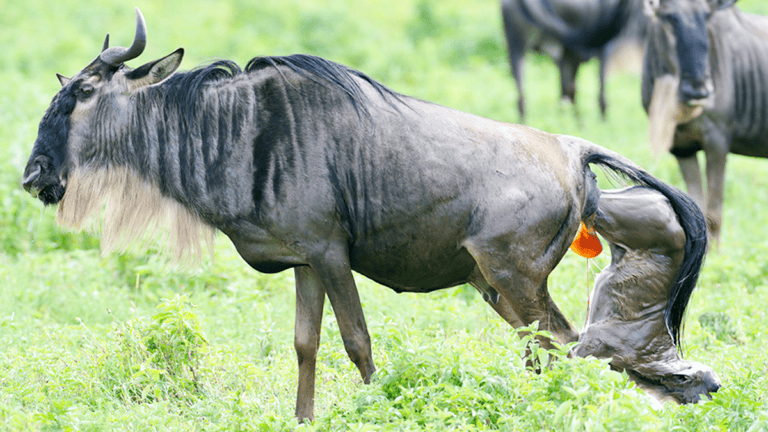
Follow the Great Migration through the Serengeti and Masai Mara: month-by-month movements, river crossings, calving season and migration safaris.
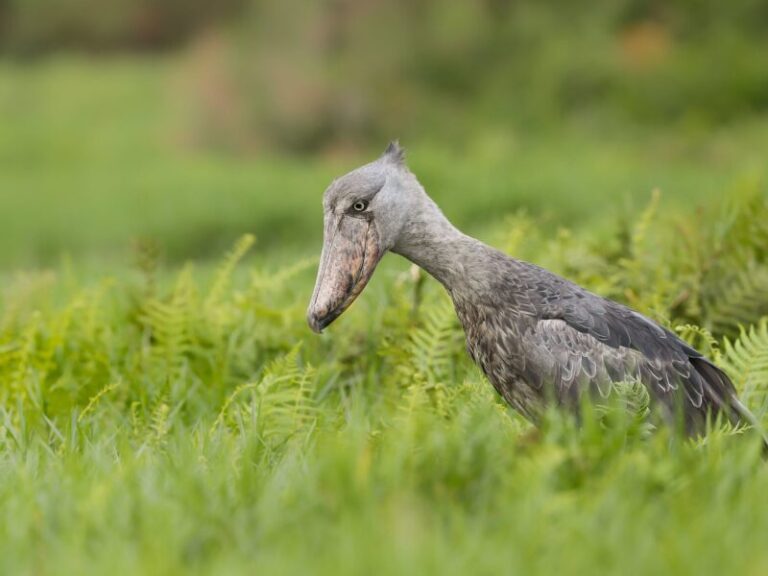
Birding safaris in Uganda, home to over 1,000 species: shoebills at Mabamba, Albertine Rift endemics in Bwindi and forest specials in Semuliki.
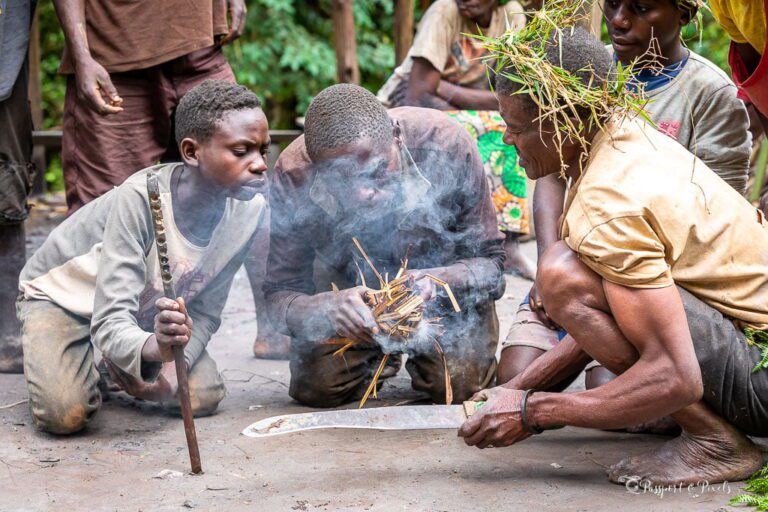
Meet the Batwa, Maasai, Karamojong and Rwanda’s village communities on a cultural safari, with respectful visits that support local people.
Safari packages
Itineraries that can include this destination. Every trip can be adjusted to your dates and budget.
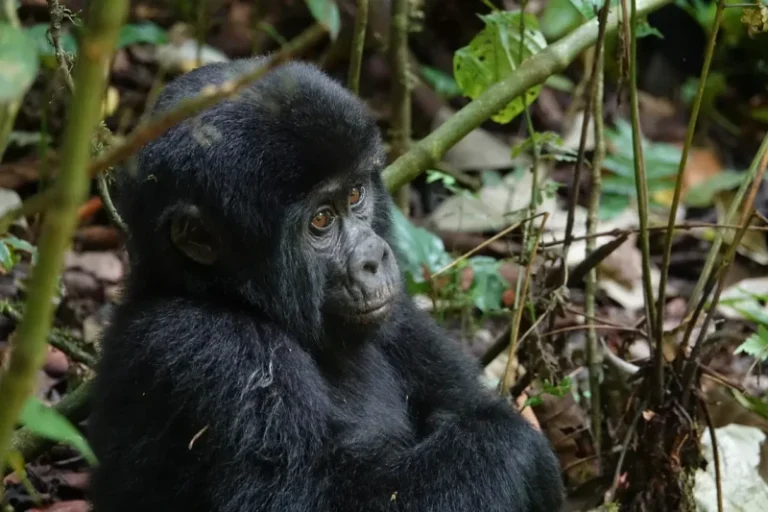
Six days, three parks: chimpanzee tracking in Kibale, game drives and a Kazinga Channel cruise in Queen Elizabeth, and gorilla trekking in Bwindi.
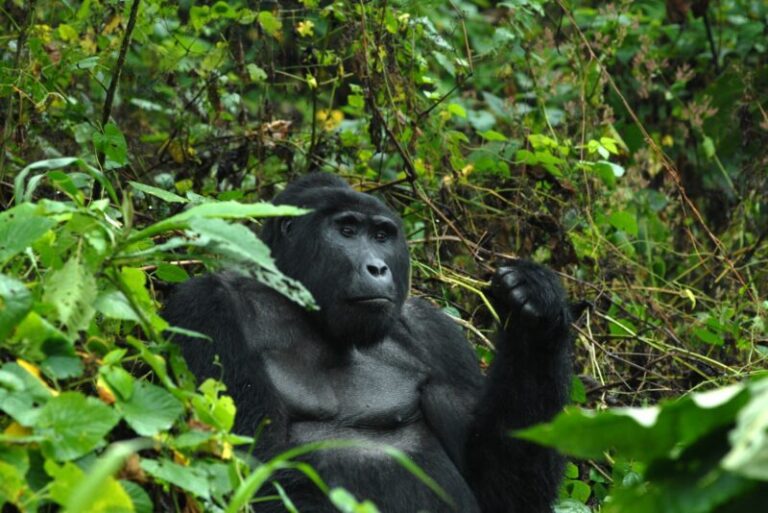
Track chimpanzees in Kibale, mountain gorillas in Bwindi and golden monkeys in Mgahinga on this 7-day Uganda primate safari.
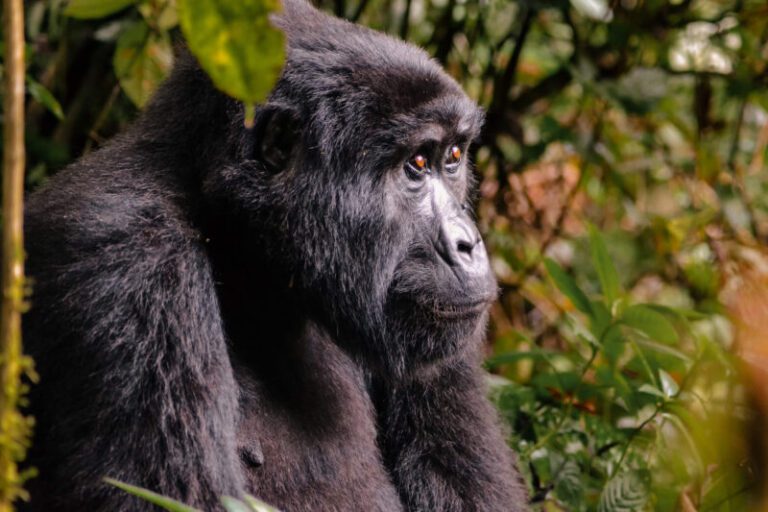
Golden monkeys in Rwanda, mountain gorillas in Bwindi and a Kazinga Channel cruise in Queen Elizabeth on this 6-day apes and wildlife safari.
We use cookies to understand how visitors use our website so we can keep improving it. You can accept or decline analytics cookies. Read our Privacy & Cookie Policy.
Gorilla Trekking, Wildlife Tours & Cultural Experiences.