
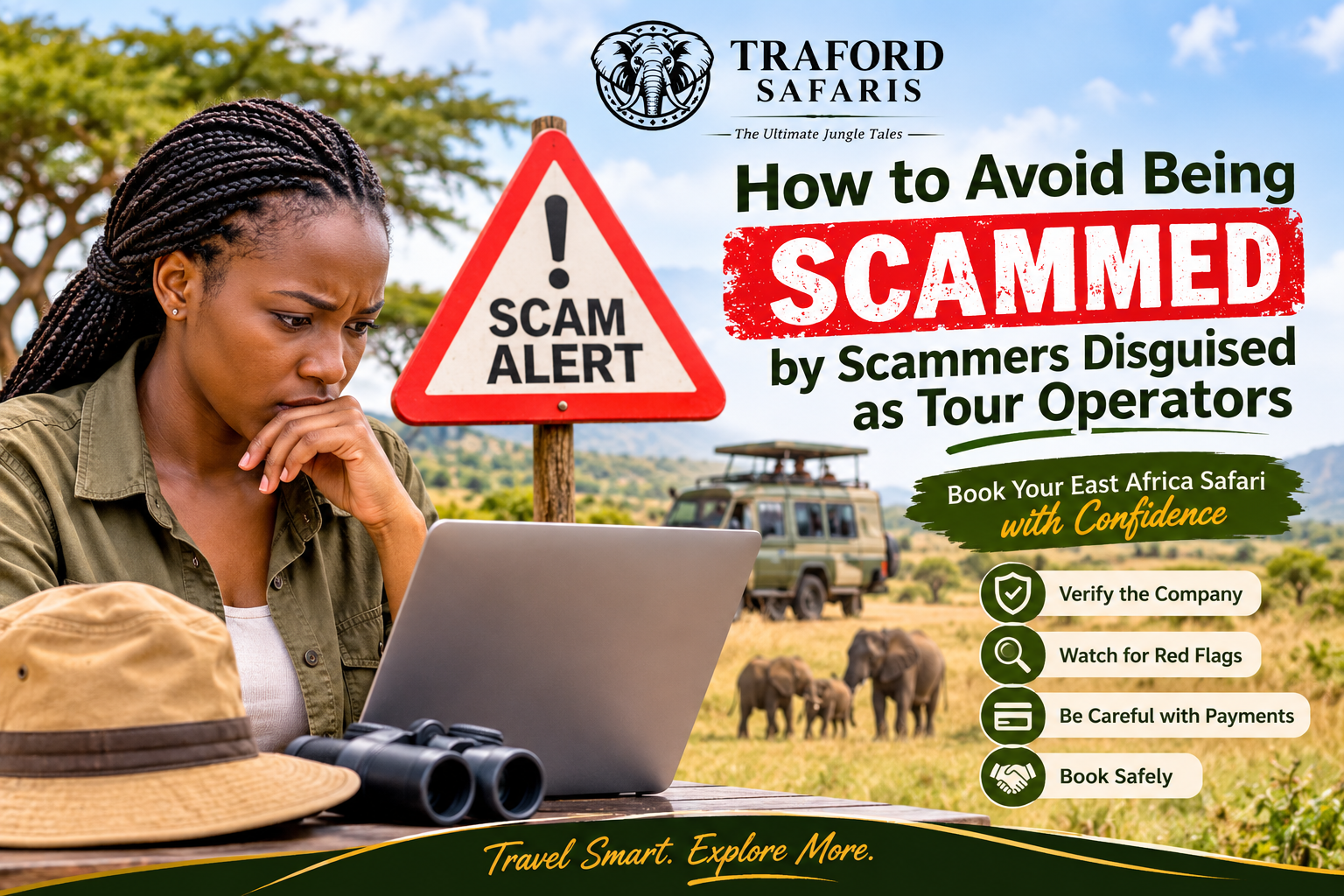
Planning an East African safari is an exciting experience. You may be dreaming of gorilla trekking in Uganda or Rwanda, wildlife safaris in Queen Elizabeth National Park, exploring Akagera, or witnessing the Great Migration in Kenya and Tanzania.
However, before you send money to a tour operator, there is something important you should do: make sure the company you are booking with is genuine.
Unfortunately, not everyone advertising African safaris online is a legitimate tour operator. Some scammers create convincing websites, copy photographs from established safari companies, use fake testimonials and impersonate genuine businesses to trick travellers into making payments.
The challenge is that these individuals can appear professional. They may communicate confidently, send beautiful safari itineraries and offer prices that seem attractive.
So, how do you protect yourself?
Here are some important things to check before booking your East African safari.
1. Verify That the Tour Operator Is Registered
One of the first steps is to establish whether the company is registered and licensed to operate in its country.
For example, if you are booking with a Uganda-based safari company, check the company’s details through the Uganda Tourism Board’s licensed tour companies directory.
You can also use the Ministry of Tourism, Wildlife and Antiquities’ Tourism E-Directory to search for registered tourism businesses.
Do not simply accept a registration certificate or licence number sent to you by the person you are communicating with. Verify the details independently.
For operators in other East African countries, check with the relevant national tourism authority
Uganda Tourism Board _ Licensing Certificate TRAFORD (1) (1)
2. Watch Out for Impersonators Using Genuine Company Names
This is one of the more difficult scams to identify.
Some fraudsters do not create entirely new tour companies. Instead, they pretend to represent existing businesses.
They may copy a genuine company’s logo, website photographs, safari packages and even customer reviews. They can also create social media accounts using a name that looks almost identical to the original business.
Before booking, check:
- Is the website address exactly the same as the company’s official website?
- Does the email address use the company’s official domain?
- Do the telephone numbers match those published on the official website?
- Are you communicating through the company’s verified or established social media pages?
If someone claims to work for a company, contact that company directly using the contact information published on its official website.
Never assume that someone is genuine simply because they know the company’s name, packages or staff members.

3. Be Suspicious of Safari Prices That Are Unusually Low
Everyone wants a good safari deal. However, an offer that is significantly cheaper than other quotations deserves closer attention.
A safari involves several expenses, including accommodation, park fees, transport, fuel, professional guides and activities.
For example, a Uganda safari combining gorilla trekking in Bwindi, wildlife viewing in Queen Elizabeth National Park and chimpanzee trekking in Kibale requires proper planning and several separate bookings.
If an operator offers an extremely low price but cannot explain what is included, ask more questions.
A genuine budget safari is possible. However, the company should be able to explain how it has arrived at the quoted price.
Always compare what different operators are offering rather than looking at the final price alone.
4. Do Not Send Money to Personal Accounts Without Verification
This is one of the most important checks before confirming your safari.
A tour operator should provide clear payment instructions and an official invoice showing the company name, booking details, amount payable and payment terms.
Be cautious if someone asks you to send money to:
- A personal bank account that has no clear connection to the company.
- A mobile money number belonging to an unrelated individual.
- An account name that differs from the business you are booking with.
- An unfamiliar payment recipient without a reasonable explanation.
Some legitimate small businesses may use different payment arrangements, so a personal account alone does not prove fraud. However, you should independently verify the recipient and obtain written confirmation before paying.
Also, be careful when someone suddenly sends new bank details or asks you to change the payment recipient. Contact the company through a previously verified channel before proceeding.
Never allow pressure to make you send money without checking.

5. Check the Company’s Website and Online Presence
A professional-looking website is a good starting point, but it does not automatically prove that a company is genuine.
Some scammers build websites specifically to attract international travellers.
Look beyond the homepage. Check whether the website contains:
- A clear company identity and contact information.
- Detailed safari itineraries.
- Information about the destinations and activities offered.
- Booking and cancellation policies.
- Realistic descriptions of its services.
- Consistent company details across its website and social media accounts.
You should also check how long the company has been operating online, although a recently established website does not automatically mean the business is fraudulent.
If something looks copied, inconsistent or suspicious, investigate further.
6. Read Customer Reviews Carefully
Online reviews can help you understand other travellers’ experiences, but you should not rely on testimonials displayed only on a tour operator’s website.
Look for independent reviews on Google and established travel platforms.
Read what previous clients actually say about their experiences.
Do they mention specific destinations, guides, accommodation and activities? Are there reviews spread across different months and years? Does the company respond professionally to questions and complaints?
Be cautious of companies with only a handful of vague, overly similar reviews.
You can also ask whether the operator can connect you with a previous traveller who is willing to share their experience.
Remember, even a large number of positive reviews should not replace registration checks and payment verification.
7. Request a Detailed Itinerary and Official Quotation
A genuine tour operator should be able to explain exactly what your safari involves.
Do not settle for a short message saying that everything is included.
Your quotation should clearly outline:
- Your destinations and travel dates.
- The number of nights at each destination.
- Accommodation names or categories.
- Transport arrangements and vehicle type.
- Activities and park entrance fees.
- Gorilla or chimpanzee permits, where applicable.
- Meals and other inclusions.
- Exclusions and additional expenses.
- Payment deadlines and cancellation conditions.
For example, if your itinerary includes Kigali, Volcanoes National Park and Lake Kivu, the operator should explain the travel arrangements between these destinations.
A detailed itinerary makes it easier to identify unrealistic promises and understand what you are paying for.

8. Verify Gorilla Permits and Other Safari Activities
If your safari includes gorilla trekking or chimpanzee tracking, ask how the permits will be secured.
Do not rely entirely on a WhatsApp message or a screenshot claiming that your permit has been booked.
Ask for the relevant booking confirmation and verify the arrangements through the responsible authority where possible.
For Uganda, you can check with the Uganda Wildlife Authority. For Rwanda, use the Rwanda Development Board or official Visit Rwanda channels.
Make sure the permit details correspond with your travel dates and the correct traveller information.
The same principle applies to accommodation, domestic flights and other major activities. Where possible, confirm important reservations directly with the relevant provider.

9. Be Careful With Last-Minute Pressure
A common warning sign is an operator who constantly pressures you to make immediate payments.
You may receive messages such as:
- “Pay within the next hour or you will lose your booking.”
- “This is the last gorilla permit available.”
- “We have a special discount, but only if you pay today.”
- “Send the deposit now, and we shall send the documents later.”
Real availability can change, especially during busy travel periods. However, a genuine operator should still give you enough information to make an informed decision.
If you are told that a permit or accommodation is almost sold out, ask for clarification and verify the availability before making payment.
Do not let urgency replace proper checks.
10. Read the Cancellation and Refund Policy
Before paying a deposit, understand what happens if you cancel your safari, change your travel dates or encounter unexpected circumstances.
Ask for written terms explaining:
- Deposit requirements.
- Balance payment deadlines.
- Cancellation fees.
- Refund conditions.
- Changes to travel dates.
- Permit cancellation and rescheduling conditions.
Do not rely on verbal promises that your money will be refunded under any circumstances.
Some safari costs, particularly permits and accommodation deposits, may have specific cancellation conditions. These should be explained before you confirm your booking.
Your Safari Booking Safety Checklist
Before sending money to any tour operator, take a moment to confirm the following:
I have checked the company’s registration and licensing.
I have verified its official website and contact details.
I am communicating with the genuine company, not an impersonator.
I have checked independent customer reviews.
I have received a detailed itinerary and quotation.
I understand what is included and excluded.
I have verified the payment recipient.
I understand the cancellation and refund policy.
I know how permits and accommodation will be confirmed.
I have received written payment confirmation.
Final Advice: Do Not Let a Safari Scam Ruin Your African Adventure
East Africa offers some of the most memorable travel experiences in the world. From meeting mountain gorillas in Bwindi and Volcanoes National Park to exploring Akagera, Queen Elizabeth and Murchison Falls, there is plenty to discover.
However, choosing the right destination is only part of planning your trip. Choosing a reliable tour operator is equally important.
At Traford Safaris, we believe travellers should feel confident about their bookings. We encourage clients to ask questions, understand their itineraries, review payment terms and know exactly what their safari includes before making a commitment.
Whether you are planning a Uganda safari, a Rwanda gorilla trekking experience or a combined East African adventure, take your time to verify the company you are dealing with.
A beautiful website, an attractive quotation or a friendly consultant should never be the only reason you trust a tour operator.
Do your research. Ask questions. Verify before you pay.
Your African safari should begin with excitement, confidence and peace of mind.
Planning your next East African safari? Get in touch with Traford Safaris to discuss your travel plans.