
When people hear Bwindi Impenetrable National Park, they usually think of mountain gorillas.
But Bwindi has another side that many travelers never hear about.
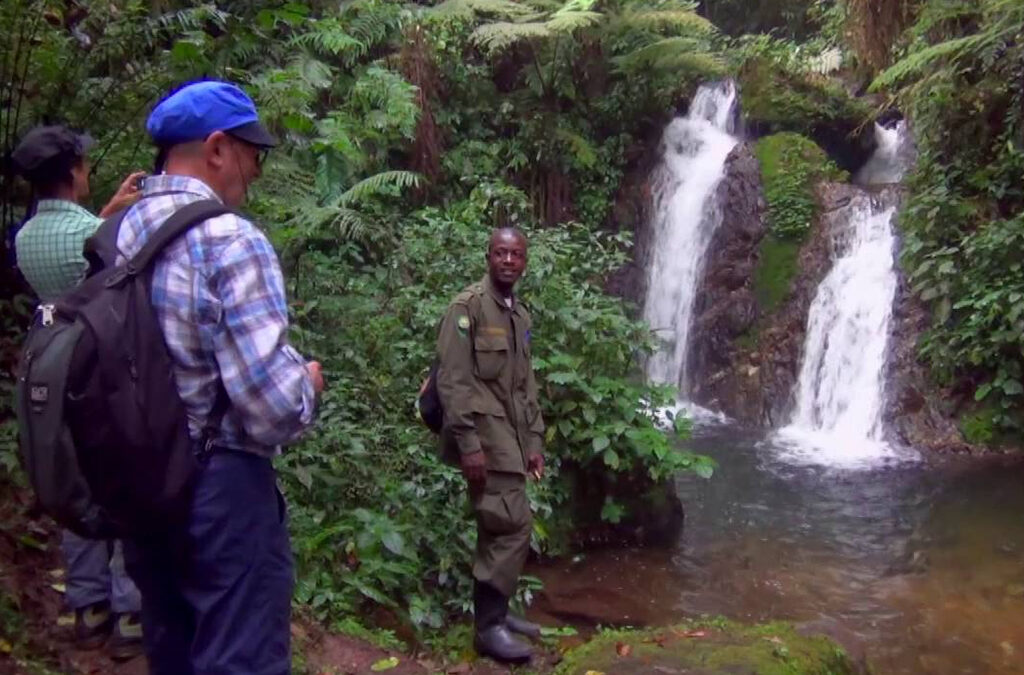
Deep inside this ancient rainforest are waterfalls, forest streams and natural pools formed by the rivers that run through the forest.
One of the best-known examples is found along the Munyaga River Falls trail in Buhoma, where a waterfall drops into a natural pool surrounded by dense rainforest.
It is a completely different way to experience Bwindi.
Instead of searching for gorillas, you follow the sound of running water, walk beneath towering trees, watch birds and monkeys, and eventually reach a beautiful waterfall surrounded by thick vegetation.
So, did you know you can explore natural waterfall pools in Bwindi?
Here is what you need to know before adding this experience to your Uganda safari.
Where Are Bwindi’s Natural Pools?
The natural pools are found around some of the waterfalls and streams within Bwindi’s forest ecosystem.
The Munyaga River Falls in the Buhoma area is one of the better-known waterfall attractions.
The trail begins around the Buhoma park headquarters and follows Bizenga Creek towards the Munyaga River. The trail is approximately 1.5 kilometres and provides opportunities to see forest birds, butterflies and monkeys along the way.
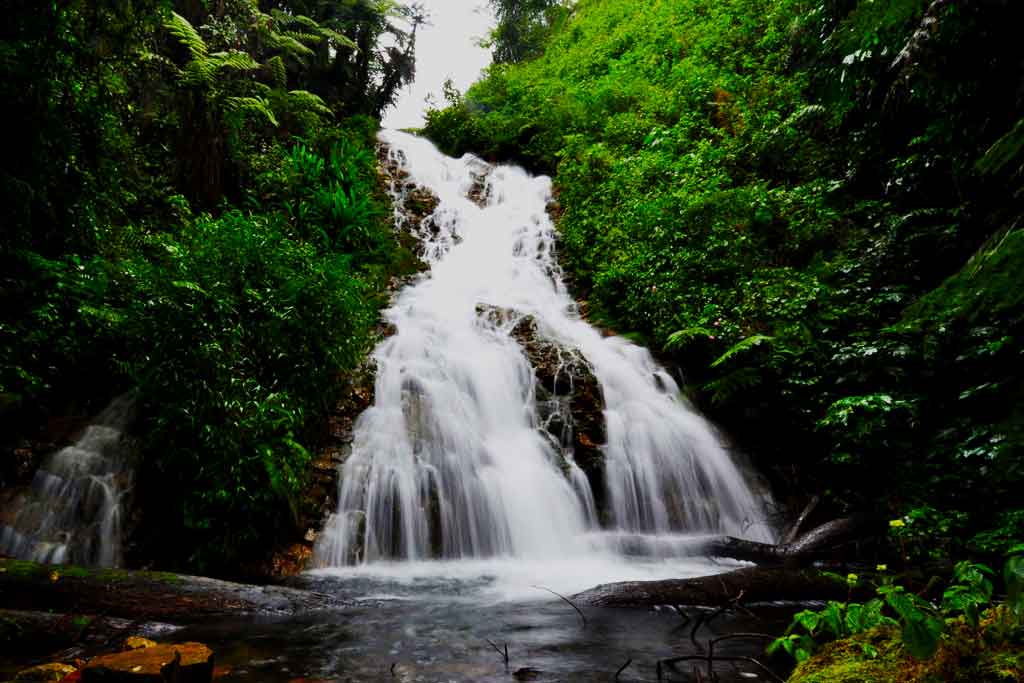
The waterfall itself drops approximately 33 metres, creating a scenic pool below.
The setting is what makes the experience special.
You are surrounded by thick vegetation, moss-covered rocks and the sounds of flowing water.
It feels much more like discovering a hidden rainforest than visiting a conventional tourist attraction.
Are These Swimming Pools?
This is where travelers need to understand the difference.
The pools at the bottom of Bwindi’s waterfalls are natural forest pools, not developed swimming pools.
They do not have changing rooms, poolside facilities, lifeguards or the infrastructure you would find at a hotel.
Although some travel sources describe the pools as places where visitors can take a refreshing splash, UWA’s official visitor information does not currently present Bwindi’s waterfall pools as a general swimming attraction. UWA instead recognises waterfall experiences and guided nature activities within the park.
Therefore, do not arrive expecting a conventional swimming excursion.
If you specifically want to enter the water, ask your guide and park authorities first.
Never enter a natural pool in Bwindi without confirming that it is permitted and safe on the day of your visit.
Water levels can change after rainfall, rocks can become extremely slippery, and natural pools do not have the safety controls found at swimming facilities.
Why Are the Pools So Special?
The beauty of these pools comes from their surroundings.
Bwindi is an ancient Afromontane forest with remarkable biodiversity. The park covers approximately 321 square kilometres and forms part of the Albertine Rift ecosystem.
Water is constantly moving through this landscape.
Streams pass between rocks, small cascades develop along the forest trails and larger waterfalls create pools below them.
The result is a series of small rainforest environments where you may encounter:
- Butterflies
- Frogs
- Forest birds
- Ferns
- Mosses
- Lichens
- Monkeys
- Dense rainforest vegetation
The water also plays an important ecological role.
It provides moisture for the forest and contributes to the network of streams that supports the wider ecosystem.
The Munyaga Waterfall Trail
If you are staying in Buhoma, the Munyaga River Falls trail is one of the experiences worth considering.
The walk follows a forested route towards the falls.
It is not a gorilla trek.
That means you do not need to spend hours searching for a gorilla family.
Instead, the focus is on the forest itself.
Along the way, you may encounter different bird species and primates. The trail also provides an opportunity to appreciate Bwindi’s smaller details that can easily be missed during a gorilla trek.
Eventually, the sound of running water becomes stronger.
Then the forest opens around the waterfall.
The approximately 33-metre cascade creates a dramatic focal point, while the pool below adds to the scenery.
For photographers, this can be one of the most rewarding short walks in the Buhoma area.

Do You Need a Gorilla Permit to Visit the Waterfalls?
No.
A gorilla trekking permit is specifically for gorilla trekking.
You do not need to purchase a gorilla permit simply because you want to experience Bwindi’s waterfalls.
However, this does not mean that you can simply enter the forest independently.
Bwindi is a protected national park managed by the Uganda Wildlife Authority (UWA). Visitors must follow the park’s access and activity requirements.
Nature walks and waterfall experiences should therefore be arranged through the appropriate park authorities or a licensed safari operator.
Do You Need a Guide?
Yes, a guided experience is the sensible option.
Bwindi is called the Impenetrable Forest for a reason.
The terrain can be steep, wet and difficult to navigate.
A local guide knows the established trail, helps visitors navigate the forest and can point out birds, plants, insects and other wildlife that you might otherwise walk past.
A guide also helps you understand the importance of protecting the forest.
This is particularly important when visiting sensitive areas around streams and waterfalls.
Can You Swim in the Natural Pools?
This is the question most travelers will ask.
The honest answer is:
Do not assume that swimming is permitted.
Natural pools can look calm and inviting, but conditions can change quickly.
Heavy rainfall upstream can increase water levels. Rocks around waterfalls can also be slippery. Some pools may have hidden rocks, strong currents or other hazards.
Most importantly, these are natural areas inside a protected ecosystem.
Before entering any water, confirm with your UWA-authorised guide whether it is permitted and safe.
If swimming is not allowed, the experience is still worthwhile.
You can sit near the waterfall, photograph the scenery, listen to the forest and enjoy the atmosphere without entering the water.
In many cases, that is the better way to experience it.
What Should You Bring?
A waterfall walk requires different preparation from a normal sightseeing tour.
1. Good Hiking Shoes
Do not wear ordinary sandals.
The forest floor can be muddy and slippery, particularly after rain.
Choose shoes with good grip.
2. Lightweight Rain Jacket
Bwindi receives rainfall throughout the year.
Even when the morning begins sunny, conditions can change in the forest.
A lightweight waterproof jacket is useful.
3. Waterproof Bag
Protect your phone, camera, passport copies and other electronics.
A small dry bag or waterproof backpack cover is ideal.
4. Insect Repellent
You are entering a rainforest ecosystem.
Insect repellent can make the walk more comfortable.
5. Drinking Water
Carry enough water for the hike.
6. Light Snacks
For longer nature walks, a small snack can be useful.
Remember to carry all rubbish out with you.
7. Camera
Bring one.
The waterfall, forest vegetation, butterflies, birds and streams create excellent photography opportunities.
What If You Want to Swim?
If your main goal is to swim, a lodge swimming pool may be a better and safer option.
Several accommodation properties around Bwindi provide swimming facilities, including properties with heated or plunge pools. For example, Sanctuary Gorilla Forest Camp in Buhoma has a heated plunge pool.
This gives you the best of both experiences.
You can explore the natural waterfalls during a guided forest walk and return to your lodge for a proper swim.
That is particularly appealing after a demanding gorilla trek.
When Is the Best Time to Visit the Waterfalls?
Bwindi can be visited throughout the year.
However, weather can influence the experience.
During wetter periods, streams and waterfalls can have stronger flows, while trails may become muddier.
The drier months can make hiking conditions easier, although rain remains possible because Bwindi is a rainforest.
If you want to photograph the waterfalls at their most dramatic, speak with your safari consultant about seasonal conditions rather than assuming that the driest month is automatically the best.
Can You Combine the Waterfalls With Gorilla Trekking?
Absolutely.
This is one of the best ways to include the experience in your itinerary.
Imagine a three-day Bwindi stay:
Day 1: Arrive in Bwindi and relax at your lodge.
Day 2: Gorilla trekking.
Day 3: Forest and waterfall walk before continuing to your next destination.
This gives you two completely different ways to experience the forest.
Gorilla trekking focuses on one of the world’s most endangered great apes.
The waterfall walk focuses on the wider ecosystem.
Together, they provide a more complete Bwindi experience.
What Else Can You Do Around Buhoma?
The waterfall experience can also be combined with other activities.
Buhoma offers opportunities for:
- Gorilla trekking
- Forest walks
- Birdwatching
- Community experiences
- Batwa cultural experiences
- Village walks
- Nature photography
UWA’s visitor information also highlights community walks around Buhoma and Nkuringo, including experiences that introduce visitors to local Batwa and Bakiga communities.
This makes Buhoma a good place to slow down rather than simply arrive for gorilla trekking and leave the following morning.
Where Can You Stay?
There are several accommodation options around the Buhoma area, ranging from comfortable lodges to luxury properties.
Some travelers choose to stay close to the park headquarters because it makes early-morning activities more convenient.
For a more relaxing post-trek experience, consider a property with a swimming pool.
That way, you can return from the forest, shower, rest your legs and enjoy a proper swim rather than relying on a natural pool.
When planning your safari, Traford Safaris can recommend accommodation based on your budget, trekking sector, preferred level of comfort and activities.
How Much Does the Experience Cost?
The cost depends on the specific waterfall or nature walk, current UWA tariffs, guiding arrangements and whether the activity is booked as part of a wider safari.
Because UWA tariffs can change, travelers should confirm the current activity fee before travelling.
The older UWA tariff documents list Bwindi nature-related activities and show that prior booking can be required for certain activities, but these published tariffs are not a reliable basis for quoting a 2026 price.
For an up-to-date quotation, Traford Safaris can check the applicable activity fees and include the experience in your safari package.
Is the Waterfall Experience Suitable for Children?
It can be, depending on the child’s age and fitness.
However, parents should remember that this is a forest hike, not a walk around a developed attraction.
The trail can be slippery and uneven.
Families should discuss the difficulty with their safari guide before setting out.
Children should also remain close to their guide and parents throughout the walk.
If swimming is permitted at a particular location, children should never enter the water without direct adult supervision and confirmation from the guide.
Important Safety Rules
Before visiting Bwindi’s natural pools and waterfalls, remember:
Follow your guide.
Do not leave the designated trail.
Do not swim without permission.
Natural water can be unpredictable.
Do not climb waterfalls.
Wet rocks are extremely slippery.
Do not litter.
Everything you bring into the forest should come back out with you.
Do not disturb wildlife.
The forest is home to many species besides gorillas.
Do not remove plants, rocks or other natural materials.
Bwindi is a protected ecosystem.
Respect local cultural values.
Some natural features have cultural and spiritual importance to communities around the forest.
Did You Know There Is More to Bwindi Than Gorillas?
This may be the biggest takeaway.
Bwindi is famous because of its mountain gorillas.
But the gorillas are only one part of a much larger ecosystem.
The waterfalls, streams, birds, butterflies, monkeys, plants and communities surrounding the forest all contribute to the experience.
In fact, UWA’s current planning documents include the development of a picnic site at the waterfalls in Bwindi North at Buhoma, showing that waterfall experiences are part of the park’s wider tourism development plans.
So, the next time you plan a Bwindi gorilla trekking safari, consider adding a waterfall or forest walk.
You may discover a completely different side of Uganda’s famous rainforest.
Explore Bwindi Beyond Gorilla Trekking with Traford Safaris
At Traford Safaris, we believe a Uganda safari should not feel like a checklist.
If you are already travelling to Bwindi for gorilla trekking, we can help you build in additional experiences that allow you to appreciate the forest, wildlife and communities around it.
Depending on your itinerary, we can combine:
- Gorilla trekking
- Waterfall and forest walks
- Batwa cultural experiences
- Community walks
- Birdwatching
- Lake Bunyonyi
- Cultural experiences
- Scenic drives through southwestern Uganda
We also help you choose accommodation close to the activities you want to experience.
Plan your Bwindi adventure with Traford Safaris and discover the side of Uganda’s impenetrable forest that many travelers never see.