
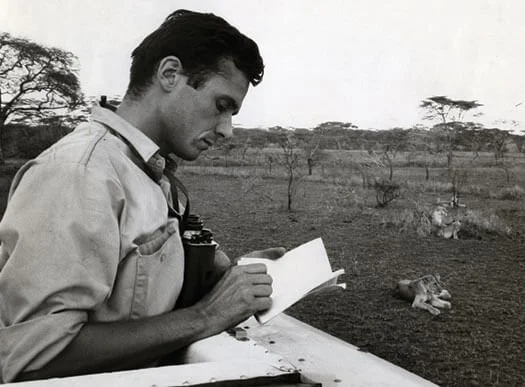
Today, mountain gorillas are among Africa’s most celebrated wildlife species. Thousands of travelers journey to Uganda, Rwanda, and the Democratic Republic of Congo each year for the unforgettable experience of gorilla trekking. Yet few visitors know the name of the man who first revealed the true nature of these magnificent apes to the world.
That man was George Schaller.
Long before gorilla tourism existed and decades before Dian Fossey became a household name, George Schaller ventured into the mist-covered forests of the Virunga Mountains to study one of the world’s least understood animals. His groundbreaking work transformed public perception of gorillas and laid the foundation for modern gorilla conservation.
Who Is George Schaller?
George Schaller is a renowned wildlife biologist, conservationist, and author born in Germany in 1933 and later becoming an American citizen. Throughout his career, he has studied some of the world’s most iconic wildlife species, including lions, pandas, snow leopards, jaguars, and gorillas.
However, it was his work with mountain gorillas that first brought him international recognition and changed the course of wildlife conservation forever.
In the late 1950s, very little was known about mountain gorillas. Many people believed they were aggressive, dangerous creatures. Scientific information was scarce, and much of what the public knew came from myths, exaggerated stories, and fictional portrayals.
Schaller wanted to discover the truth.
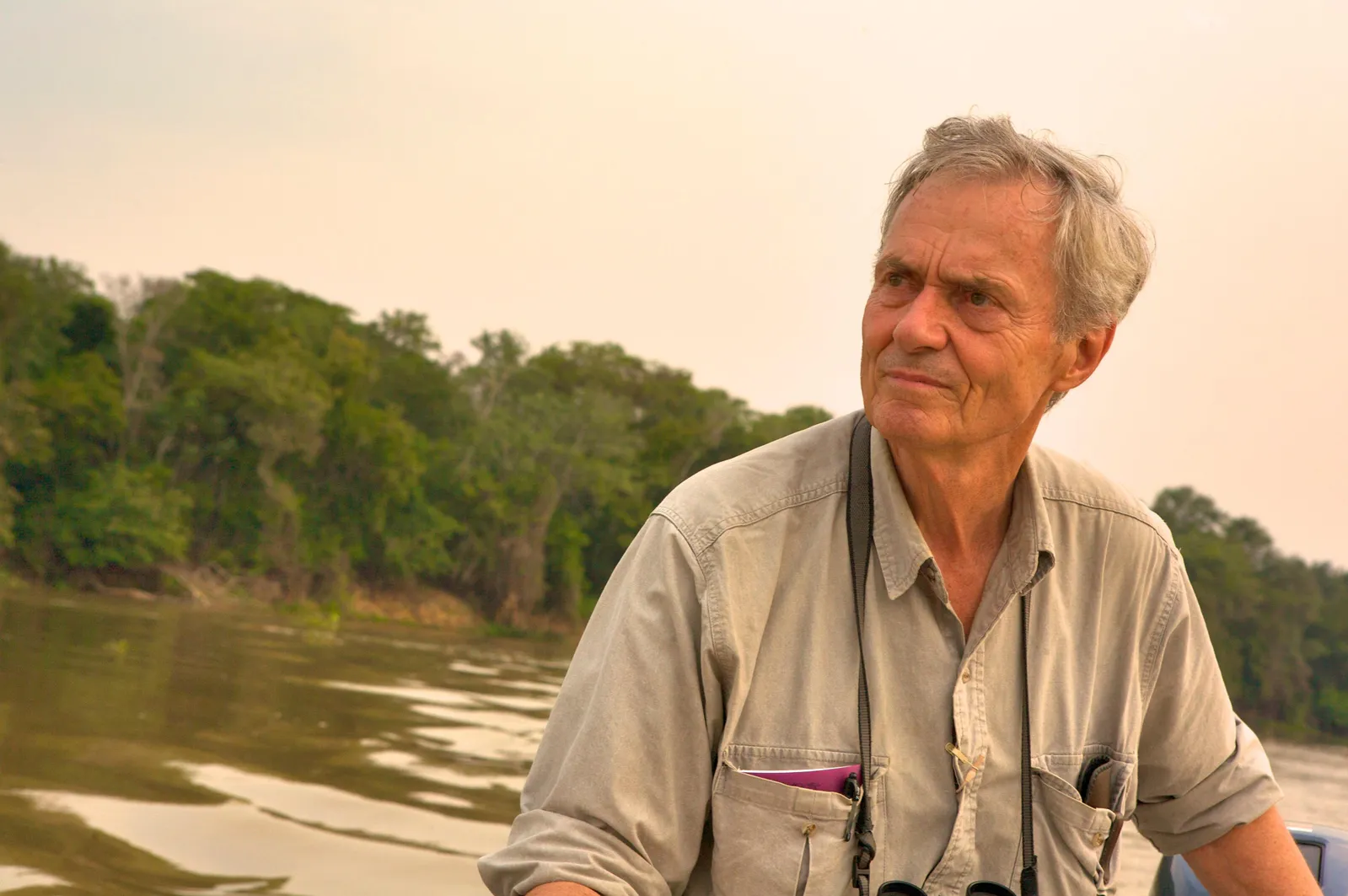
Journey Into the Virunga Mountains
In 1959, George Schaller traveled to the Virunga Mountains, a volcanic region stretching across present-day Rwanda, Uganda, and the Democratic Republic of Congo.
At the time, studying gorillas in the wild was extremely challenging. There were no established research stations, no habituated gorilla groups, and little understanding of gorilla behavior.
For more than a year, Schaller immersed himself in the gorillas’ habitat, patiently observing and documenting their daily lives.
Instead of finding violent beasts, he discovered peaceful, highly social animals living in closely bonded family groups.
His observations challenged many long-held assumptions and marked the beginning of modern gorilla science.

Changing the World’s View of Gorillas
One of Schaller’s greatest achievements was helping people see gorillas as intelligent and gentle creatures rather than fearsome monsters.
His research revealed that gorillas spent much of their time feeding, resting, grooming, and caring for their young. Aggressive encounters were relatively rare and usually involved displays rather than actual violence.
These findings were revolutionary.
For the first time, scientists and the public gained an accurate understanding of mountain gorilla behavior.
Today, anyone who has participated in gorilla trekking in Uganda or Rwanda will recognize many of the behaviors Schaller first documented more than six decades ago.
The Groundbreaking Book That Changed Conservation
In 1963, Schaller published his landmark book, The Mountain Gorilla: Ecology and Behavior.
The book became one of the most influential wildlife studies ever written. It provided the first comprehensive scientific account of mountain gorillas and remains an important reference for researchers today.
The publication not only advanced scientific knowledge but also generated international interest in protecting mountain gorillas and their habitat.
Many conservationists consider it the starting point of modern mountain gorilla conservation.

Inspiring Dian Fossey
Perhaps one of George Schaller’s most important contributions was inspiring future generations of researchers.
Among those influenced by his work was Dian Fossey, who later established the Karisoke Research Center in Rwanda and became one of the world’s most famous primatologists.
Fossey often acknowledged Schaller’s pioneering research and used it as a foundation for her own studies.
In many ways, Schaller opened the door through which Fossey and countless other conservationists would later walk.
A Legacy Beyond Gorillas
Although his gorilla research made him famous, Schaller’s conservation work extended far beyond Africa.
Over the decades, he conducted pioneering studies on wildlife across Asia, South America, and North America. His efforts helped improve conservation strategies for numerous endangered species and habitats around the world.
He became widely respected as one of the greatest field biologists of the twentieth century.
Yet his work among the mountain gorillas remains one of his most enduring achievements.
Why George Schaller Matters Today
The success of mountain gorilla conservation is one of the greatest wildlife recovery stories in modern history. From a population that once faced severe threats from habitat loss, poaching, and political instability, mountain gorillas have gradually increased to more than 1,000 individuals.
This achievement is the result of decades of collaboration among governments, conservation organizations, researchers, park authorities, local communities, and tourism stakeholders.
However, effective conservation begins with understanding a species, and that understanding began with George Schaller.
Without his research, the world might never have recognized the true value of protecting mountain gorillas.
The Connection to Gorilla Trekking Today
Every gorilla trekking experience in Uganda’s Bwindi Impenetrable National Park, Mgahinga Gorilla National Park, or Rwanda’s Volcanoes National Park is built upon decades of research and conservation.
The habituation processes, visitor regulations, conservation policies, and scientific monitoring programs used today all benefit from the knowledge first gathered by pioneering researchers like George Schaller.
When visitors spend an hour observing a gorilla family in the wild, they are witnessing behaviors that Schaller was among the first scientists to document and explain.
Conclusion
George Schaller may not be as famous as Dian Fossey, but his contribution to mountain gorilla conservation is immeasurable. By replacing myths with science and fear with understanding, he changed how the world viewed one of its most remarkable animals.
His pioneering research provided the foundation upon which modern gorilla conservation was built and helped inspire generations of scientists and conservationists.
Today, every successful gorilla trek in East Africa stands as a testament to the work of the man who introduced mountain gorillas to the world.