
Planning an affordable Christmas safari in East Africa does not mean giving up the experiences that make an African holiday special. It means knowing where your money matters most and making careful choices before you travel.
Christmas is a popular time to travel. Families have school holidays, couples take annual leave and many international travellers use the festive season for longer trips.
That can make safari planning more expensive.
However, an unforgettable Christmas safari does not have to mean choosing the most expensive lodge, vehicle or itinerary.
With the right planning, you can experience Uganda, Kenya or Rwanda while keeping your safari within a realistic budget.
The trick is knowing what to spend on and what you can comfortably save on.
First, understand what makes a Christmas safari expensive
Before looking for ways to save, understand where your money actually goes.
A safari quotation can include:
- Accommodation
- Safari vehicle and driver-guide
- Park fees
- Meals
- Airport and road transfers
- Game drives
- Boat trips
- Gorilla or chimpanzee permits
- Cultural experiences
- Christmas or New Year arrangements
Not every traveller needs all of these at the same level.
For example, a traveller interested mainly in wildlife does not necessarily need a luxury lodge with a private plunge pool.
Another traveller may consider a gorilla permit non-negotiable because gorilla trekking is the main reason for visiting Uganda or Rwanda.
An affordable safari starts by deciding which experiences matter most to you.
1. Choose your destination carefully
East Africa is not one single safari market.
Uganda, Rwanda and Kenya offer very different experiences and price structures.
Uganda can be attractive for travellers who want to combine wildlife, primates, gorillas and cultural experiences in one journey.
Kenya offers famous wildlife destinations such as the Maasai Mara and Amboseli, with a wide range of accommodation options.
Rwanda is particularly well known for gorilla trekking in Volcanoes National Park, as well as Nyungwe and Akagera.
The important point is this:
Do not choose a destination simply because someone says it is the cheapest.
Compare the complete safari.
A lower daily rate can become expensive if you need several additional transfers, domestic flights or costly activities.
2. Do not try to see everything in one Christmas holiday
This is one of the easiest ways to overspend.
Travellers sometimes create an itinerary that looks impressive on paper:
Uganda → Rwanda → Kenya → Tanzania
in one short holiday.
The problem?
Every border crossing, transfer and additional destination adds time and cost.
You may spend more of your Christmas sitting in a vehicle than actually enjoying the places you travelled so far to see.
Instead, choose a route that makes geographical sense.
For example, a Uganda Christmas safari could combine:
Queen Elizabeth National Park → Bwindi → Lake Bunyonyi
rather than constantly crossing the country.
A Rwanda itinerary could combine:
Volcanoes → Nyungwe → Lake Kivu
with enough time to enjoy each destination.
At Traford Safaris, we look at the route as well as the destinations when preparing safari quotations. A good itinerary should reduce unnecessary driving rather than simply add more names to the map.
3. Choose accommodation for location, not just luxury
Your lodge is one of the easiest places to control your safari budget.
You do not need to stay in a luxury property to have a memorable Christmas safari.
Budget and mid-range lodges can still offer:
- Comfortable rooms
- Meals
- Scenic surroundings
- Access to national parks
- Local hospitality
- Safari-friendly locations
However, do not choose accommodation based only on the lowest price.
A lodge that is far from your park entrance could create longer transfers each day.
Sometimes spending slightly more on a well-located lodge saves both time and transport costs.
For Christmas travel, also check whether the property charges a mandatory Christmas or New Year supplement.
This can make a noticeable difference to the final quotation.

4. Consider a safari van instead of a Land Cruiser
Your safari vehicle can also affect the overall cost.
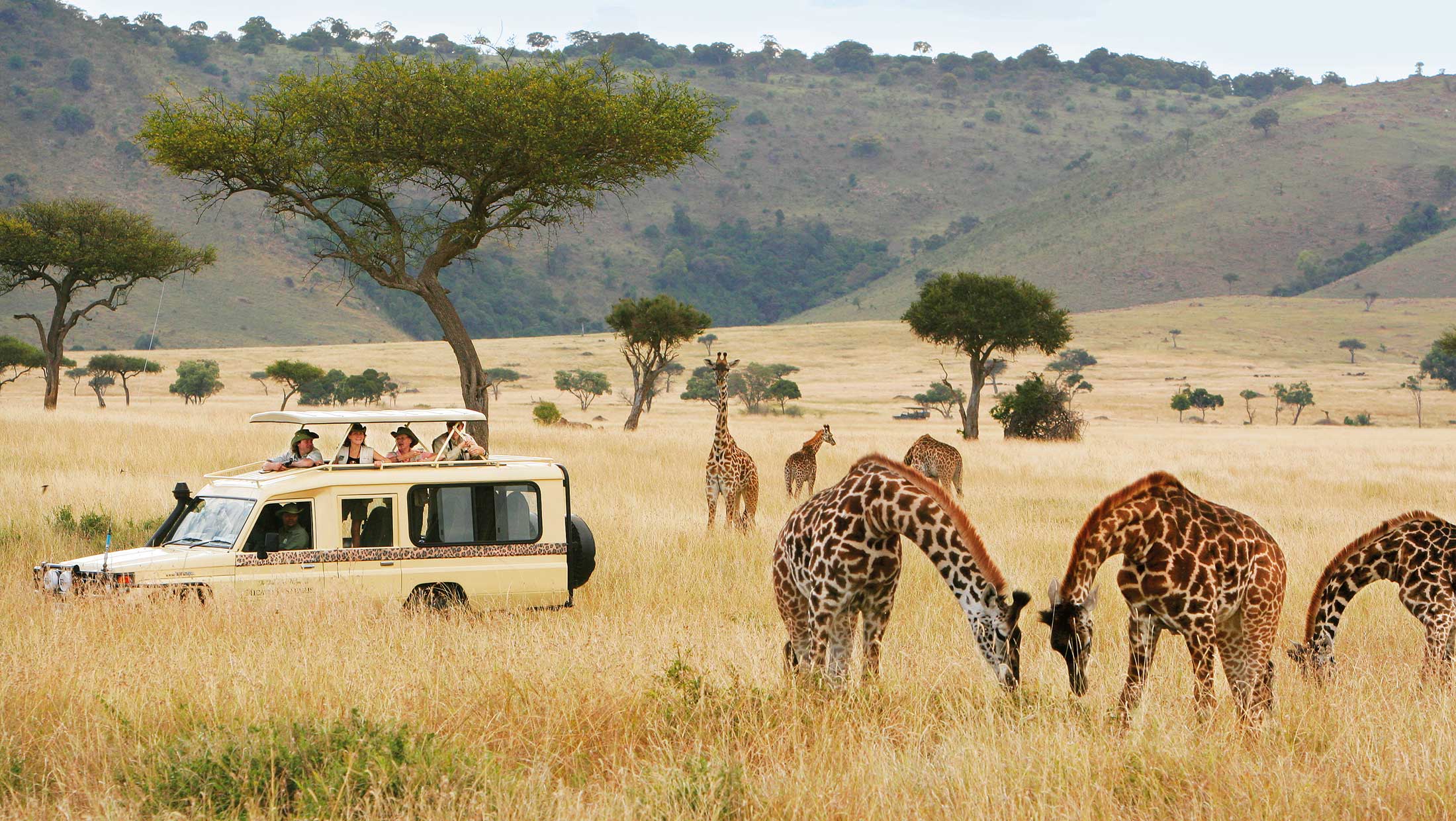
For travellers watching their budget, a 4×4 open-roof safari van can provide an excellent safari experience.
It offers a raised viewing position and open sides that make it easier to watch wildlife and take photographs.
A Land Cruiser can offer additional comfort and is often preferred for certain safari styles, but it may increase the overall cost.
This does not mean one vehicle is automatically better.
It depends on your priorities.
If your main goal is to experience Uganda’s wildlife while keeping the safari affordable, discussing different vehicle options with your safari operator can make a meaningful difference.
5. Spend your money on the experiences you cannot replace
This is perhaps the most important budgeting rule.
Some safari experiences are easy to downgrade.
Others are not.
If gorilla trekking is your dream, for example, the gorilla permit is not something you can replace with a cheaper alternative.
Uganda’s standard foreign non-resident gorilla permit is currently listed at US$800 per person for the 2026/27 tariff period.
That is a significant part of the budget.
So instead of trying to make everything luxury, you could choose comfortable mid-range accommodation around your gorilla trek.
You still get the experience that brought you to Uganda.
This is what smart safari budgeting looks like:
Save on things that do not matter to you. Protect the experiences that do.
6. Travel with the right number of people
Safari costs are often shared.
A private vehicle with one traveller can work very differently from the same vehicle shared by four people.
For couples, families or friends travelling together, transport costs can be spread across the group.
However, do not assume that a larger group automatically means a better deal.
The vehicle size, accommodation requirements and activities still matter.
Ask your safari company how the price changes for:
1 traveller vs 2 vs 4 vs 6 travellers.
That simple comparison can help you understand the real cost structure.
7. Book your Christmas safari early
Trying to save money by waiting until the last minute can sometimes have the opposite effect.
Christmas is a fixed holiday period.
If you wait too long, your preferred lodge may be full.
A suitable alternative may then cost more.
This is particularly important if your itinerary includes gorilla trekking, because permits are limited and must be arranged for a specific trekking date.
Early planning also gives you more time to compare accommodation categories and different safari routes.
For Christmas 2026, travellers should already be checking availability rather than assuming they can arrange everything a few weeks before departure.
8. Do not confuse “cheap” with “affordable”
There is an important difference.
A cheap safari may simply offer the lowest possible price.
An affordable safari looks at value.
For example, you might choose:
- A comfortable mid-range lodge instead of luxury
- A safari van instead of a premium vehicle
- Fewer destinations
- Shared activities where appropriate
- A longer itinerary with fewer unnecessary transfers
- Local cultural experiences instead of expensive add-ons
- Accommodation close to the park
The result may not be the absolute cheapest safari.
But it can give you more meaningful experiences for the money you spend.
9. Use cultural experiences to add depth without constantly adding expensive activities
A safari does not have to be only about game drives.
East Africa has rich cultural experiences that can make a Christmas holiday much more memorable.
In Uganda, you could add a community visit, traditional food experience or cultural encounter around your wildlife itinerary.
In Rwanda, travellers can combine wildlife with local culture, tea or coffee experiences and communities around their route.
In Kenya, cultural experiences can introduce travellers to local traditions and ways of life alongside the famous wildlife destinations.
The key is to choose experiences that fit naturally into your route.
You should not drive several hours simply to add a one-hour activity to your itinerary.

10. Build in enough time
This sounds like the opposite of budgeting.
It is not.
A rushed itinerary can actually waste money.
Imagine spending thousands of dollars on a safari but losing an entire day because your itinerary requires an unnecessarily long transfer.
Or arriving at the airport exhausted after an eight-hour road journey.
An affordable safari should still be comfortable and realistic.
For example, if you are travelling from western Uganda back toward Entebbe before an international flight, it is often better to spend the final night closer to Entebbe rather than combining a long road journey with your departure.
At Traford Safaris, we believe the journey between destinations should be part of the planning not an afterthought.
What about Christmas Day itself?
You do not have to spend Christmas Day inside a lodge doing nothing.
You can make it part of the safari.
Depending on your destination, Christmas morning could include a game drive, followed by a festive lunch or dinner at your lodge.
Some properties arrange special Christmas meals or activities, while others operate normally.
Always ask what is included.
A “Christmas package” can mean different things at different properties.
How much should you budget?
There is no single price for an East African Christmas safari.
A realistic budget depends on:
Destination + number of days + accommodation + vehicle + activities + permits + number of travellers.
A five-day Uganda wildlife safari without gorilla trekking will have a very different cost from a five-day Uganda gorilla safari.
Likewise, a luxury private safari in Kenya will have a very different price from a budget-conscious shared or mid-range itinerary.
Instead of searching for one universal “Christmas safari price,” request a quotation based on your actual travel dates and priorities.
Is an affordable Christmas safari really possible?
Yes but affordable does not mean cutting everything to the lowest possible price.
It means making deliberate choices.
You might sleep in a simple but comfortable lodge, travel in a safari van and skip expensive extras.
Then you wake up the next morning and find yourself watching elephants in Queen Elizabeth National Park.
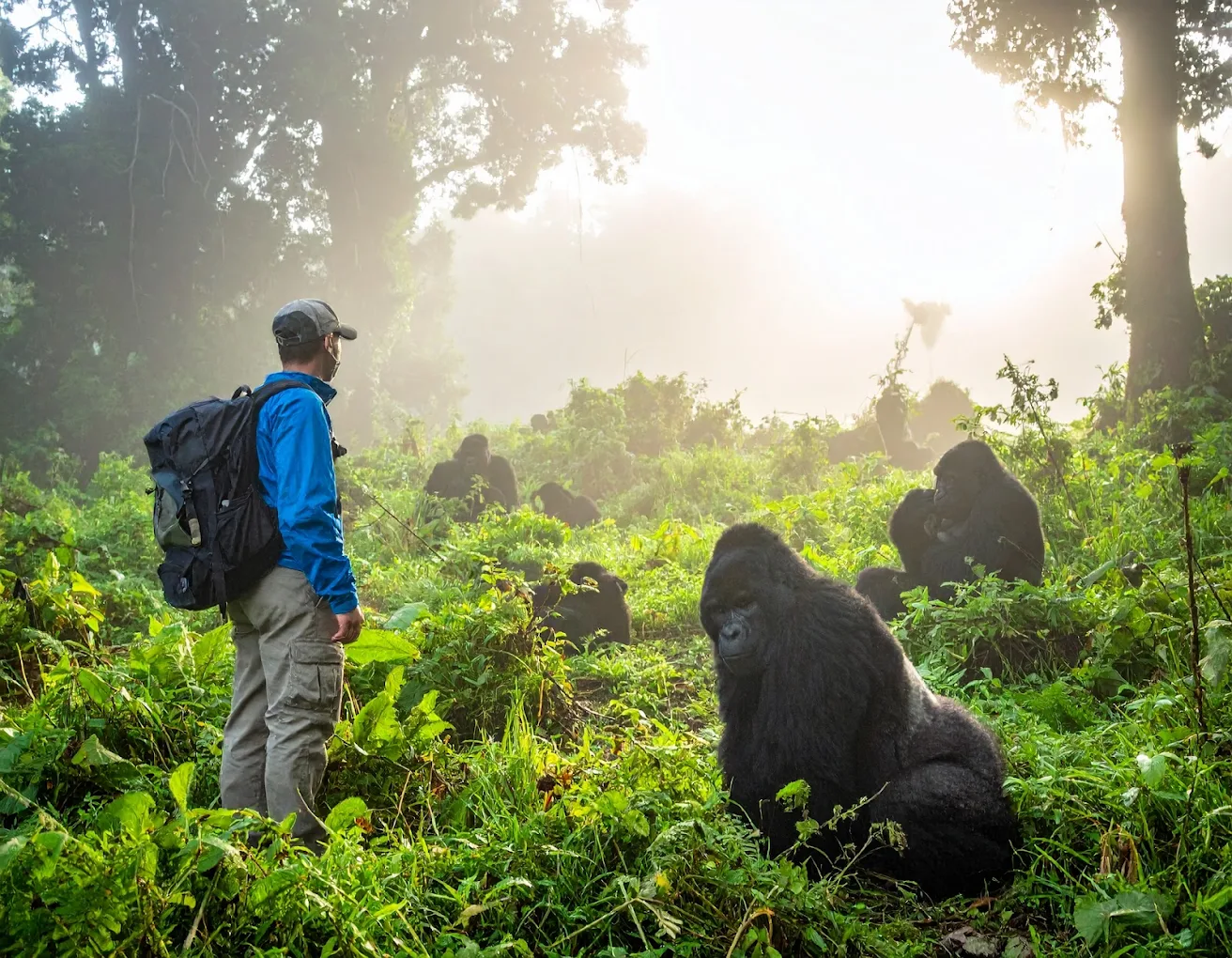
Or you walk into Bwindi’s rainforest and come face-to-face with a mountain gorilla.
Or you watch the sun set over the Maasai Mara.
Those are the moments your money is really buying.
At Traford Safaris, we plan budget-friendly, mid-range and higher-end safaris across Uganda, Rwanda and Kenya, tailoring the route, accommodation and activities to the traveller rather than forcing every Christmas holiday into the same package.
So, if you are planning Christmas 2026, start with one question:
What do you most want to experience?
Once you know that, building an affordable safari around it becomes much easier.